Fuse two sounds into one





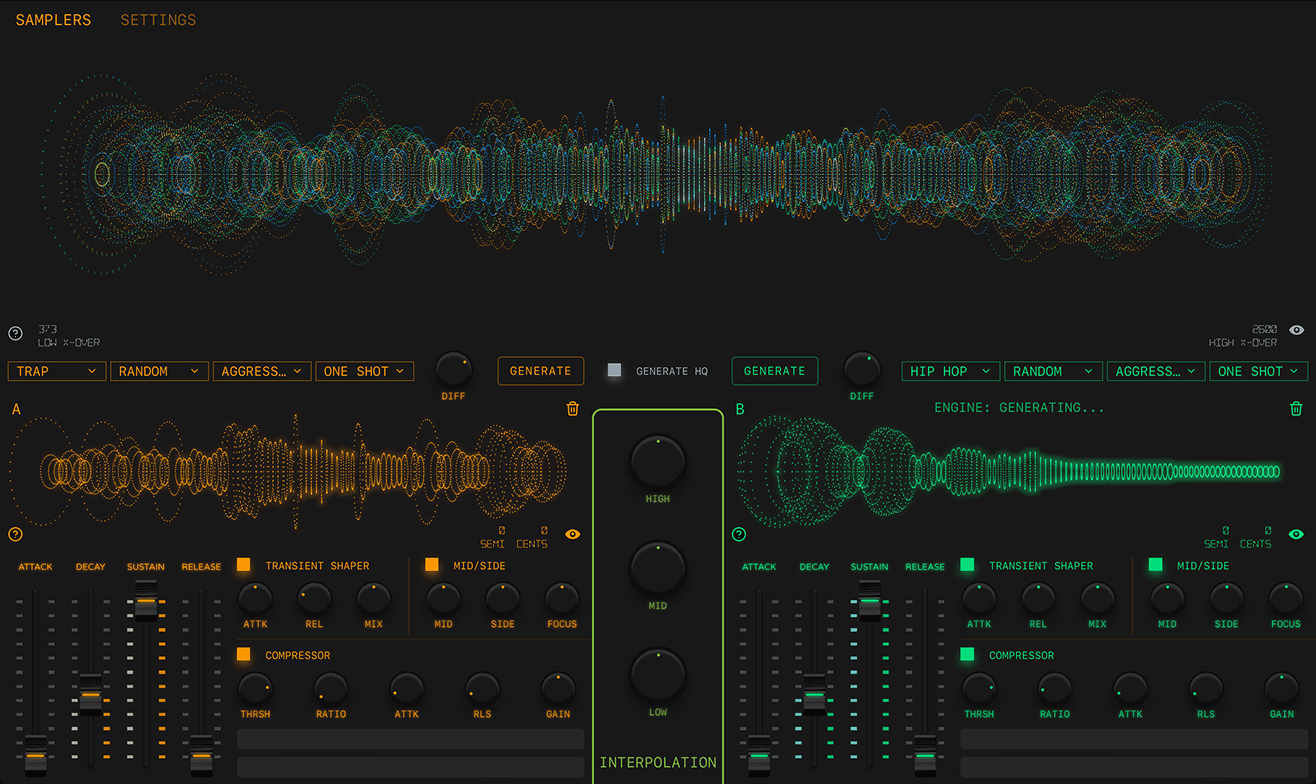
Interloper is the next evolution of layering
With our brand new Multiband Interpolation Engine, you have ultimate artistic control over which lows, mids, and highs come from each of two sources so you can finally design the exact sound you want in seconds.

Multiband Interpolation Engine
Blend LOW, MID and HIGH bands from two sources with adjustable crossovers to create truly new hybrid samples with no guesswork.

Built‑in AI Drum Generation
Generate kicks, snares, hats and more - all offline and token‑free - then interpolate with your library for endless variations.

Pro‑grade Processing
ADSR, transient shaping, compression, mid/side, filters, convolver, and reverb - sculpt before and after interpolation for mix‑ready results.

Fast, Focused Workflow
Drag‑and‑drop loading, real‑time visual feedback, preset saving and MIDI keep you creating - not troubleshooting stacks.
interloper
New
$149
$37
Features:
- Multiband Interpolation Engine
- Built‑in AI drum generation (offline, token‑free)
- Pro‑grade processing and effects
- Fast workflow: drag‑and‑drop, presets, real‑time visuals
Frequently Asked Questions
Can’t I just do this with EQ and manual routing?
You can mostly get there with bunch of EQ instances, splits, and routing - but that workflow is slow to iterate, easy to break, and hard to make repeatable. Even when you nail it once, auditioning variations, recalling the exact blend later, or automating it musically usually turns into a technical project. Interloper collapses that whole chain into a single playable instrument, so you can move fast: try combinations in seconds, lock in a blend you can reliably come back to, and perform/automate the morph over time-staying in creative mode instead of wiring mode.